

The Earth Element
A SYSTEM THAT EATS ITS OWN INFRASTRUCTURE IS FUCKING STUPID.
Earth is the element of nourishment, maintenance, care, processing, and regeneration.
Explore Earth below
What is Earth actually doing?
EARTH MAKES LIFE SUSTAINABLE BY TENDING TO WHAT LIVING THINGS REQUIRE.
The core idea of Earth energy is to tend to life: it takes in, processes, and nourishes. Earth supports. It replenishes. Earth is what allows a living system to receive what it needs, make use of it, and have enough available to participate in what comes next.
Which sounds mind-numbingly theoretical, until you realize how you use Earth constantly.
Being alive is expensive.
You need food. Water. Rest. Care. Shelter. Attention. Resources. You use things up simply by continuing to exist, and then you need more.
You eat because the body that ate yesterday needs to eat again today. You buy groceries before there is nothing left to make dinner. You refill the prescription. You wash the sheets. You notice the dog food is getting low. You rest because the energy you used is no longer available just because you would find it convenient for it to be. You bring food to someone who is sick. You sit with a friend who is having a terrible time. You figure out what your kid needs in order to get through the school day.
And sometimes the requirement isn't an object.
You may have food available and still need something your body can tolerate. Someone may offer help and discover that the help you actually need looks different. Earth reminds us that nourishment isn't generic.
Living things have particular requirements, and those requirements change. What sustains one body may not sustain another. What restored you last year may not restore you now. What a person needs when they're sick is different from what they need when they're well. What allows a child to thrive in one season of their life may become completely insufficient in the next.
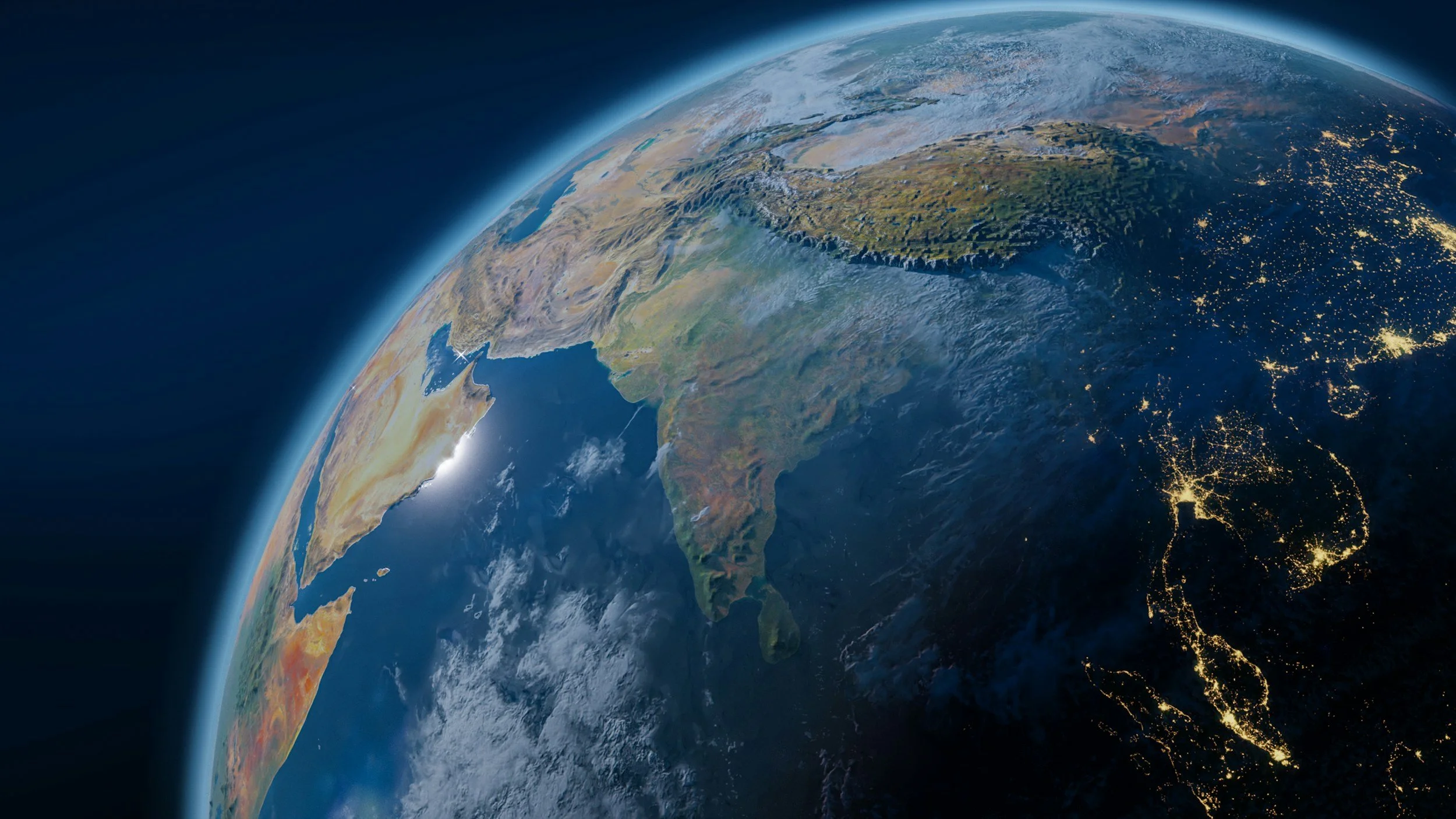
This is the ordinary work of Earth: tending to what living systems require, receiving and transforming resources, and creating the conditions through which nourishment becomes available to Life.
And because we're alive, those requirements don't stay fixed.
Bodies grow. Kids outgrow every pair of pants apparently overnight and also eat all the cheese in the home. People get sick and recover. Relationships change. Work changes. Capacity changes. What supported you five years ago may not support you now. What you could easily provide yesterday may cost you enormously today.
There is no permanently completed state called everyone has what they need now, which means Earth is not simply the capacity to provide: is is also the ongoing relationship between a living system and the conditions required to sustain it. And then that allows us to see that access to resources is not the same thing as nourishment. Life requires what it receives to become available to… Life.
Food has to be nourishing. Rest has to be restorative. Support has to be supportive. Resources have to circulate in ways that sustain the living system rather than weirdly accumulating in a corner.
And this is where Earth gets much more interesting than remembering the what kind of ketchup your best friend likes: a system can appear beautifully maintained precisely because one part of it is supplying the nourishment, attention, memory, labor, and resources that allow everything else to function — everyone appears remarkably self-sufficient because the overall container is running smoothly — and meanwhile, somebody's qi is footing the bill.
Healthy Earth therefore cannot be measured only by how effectively the system is maintained. We also have to ask whether the conditions that sustain Life are themselves being sustained.
That is what Earth makes possible for Life: nourishment. It creates the material and relational conditions through which a living system can receive what it requires, make use of it, regenerate what it spends, and remain resourced enough to participate in being alive.

Each element has paired organs.
Earth governs the Spleen and Stomach. Functionally, they’re built around the same rhythm: receive, break down, transform, transport, and derive nourishment from what comes in.
The Stomach receives. Something from outside the living system enters and has to be held long enough for digestion to begin. The Spleen’s traditional functions include transforming what has been received and transporting what can be used so that nourishment becomes available throughout the system.
This isn't optional. Food can be abundant and readily available, but if the body can't transform it into something usable, its presence alone cannot sustain you.
Which gives Earth a more complicated job than simply acquiring resources. Something has to happen between having access to nourishment and being nourished by it.
A meal has to become usable. Rest has to become restoration. Support has to actually reach the person it is intended to support. What enters the system has to become available to the life inside it.
Earth knows that having access to nourishment and actually being nourished are not the same thing.

Each element has an energy movement.
Earth's qi moves toward and through the center.
It brings what is available into relationship with the living system so that something can happen to it: it can be received, broken down, transformed, distributed, and used.
But centering requires something surprisingly important: what comes in has to become available to the life that receives it.
Earth doesn't simply accumulate resources. It metabolizes them.
Food has to become nourishment. Information has to become something you can understand or use. Support has to actually support you. Rest has to reach the exhausted system. What is available outside the system has to cross into it, be processed according to its particular requirements, and become usable from within.
Which means more is not necessarily more nourishing.
You can only be nourished by what you can take in. You can only use what can be transformed. You can only givesustainably when something is also replenishing what gets spent. And you can only regenerate when the system has access to resources it can actually use.
Earth's movement brings resources into relationship with the living center so that what is available can become what Life can use.

Each element has a spirit.
Earth's spirit is the yi: the aspect of spirit associated with thought, intention, concentration, and our capacity to work with what we take in.
Which means Earth doesn't only process food.
We take in information, experiences, ideas, expectations, care, demands, and the needs of the people around us. The yihelps us stay with what we've received long enough to work with it: to turn it over, learn from it, make sense of it, and determine what, if anything, can nourish or inform us.
Receiving something doesn't require making it part of you.
Sometimes processing an experience allows you to incorporate something useful. Sometimes it allows you to recognize that what you've been carrying isn't actually yours. Sometimes it simply allows an experience to move through rather than remain indefinitely occupying your attention.
The yi gives spirit the capacity to metabolize experience: not merely to have something happen, but to work with what has happened and derive something usable from it.
Earth gives spirit a way to be nourished by what Life takes in.
Each element has an emotion.
Earth's emotion is rumination: the repetitive turning-over of something in the mind so that it can be processed.
Rumination follows Earth's rhythm. We take something in. We spend time with it. We work it over, consider it from different angles, and try to derive something useful from what we've received.
An experience can take time to understand. A question may need to stay with you before you know what you think about it. You can return to the same conversation six times and notice something different each time. The fact that your mind keeps returning to something doesn't necessarily mean you're stuck; you may still be extracting something from it.
But the point of chewing is digestion.
Eventually, processing has to make something available to the living system: understanding, information, meaning, a decision, a changed perspective, or simply the recognition that there is nothing more here to extract.
Otherwise the process that was meant to help us metabolize what we received can become the place where it remains indefinitely.
You can chew your cud until you've gotten all the nutrients out of it, or you can chew it until you've made a brick.
Rumination gives Life time to work with what it has taken in. Healthy Earth allows that processing to eventually become something the living system can use—or release.
Each element has a season.
Earth belongs to the transitions between seasons, when the natural world reorganizes itself for what comes next.
Transitions require Earth because change creates maintenance work. Resources have to be redistributed. What was sufficient under one set of conditions may no longer be sufficient under another. The living system has to recognize its changing requirements and reorganize its support accordingly.
This is true outside of seasonal change, too.
Birth, postpartum, illness, recovery, puberty, menopause, moving, divorce, a new job, a child starting school: transitions alter what a living system requires before we necessarily know what the new requirements are.
And those in-between periods are not simply inconvenient gaps between two more legitimate states.
They have requirements of their own.
A system in transition may need more rest, more food, different support, additional time, greater flexibility, or entirely different infrastructure than it needed before. Trying to maintain the old conditions while demanding successful adaptation to the new ones can consume the very resources required for the transition.
Earth tends the living system while its needs are changing.
A transition isn't simply the space between two stable forms. It is a living period with nutritional, material, emotional, relational, and practical requirements of its own.
Earth allows Life to remain nourished while the conditions required to sustain it are changing.
What happens to Earth under patriarchy?
Patriarchy doesn't create a different Earth function. It takes functions we actually need — nourishment, care, maintenance, processing, support, regeneration, the capacity to sustain ourselves and participate in sustaining one another — and reorganizes them around power.
The function isn't the pathology.
As an acupuncturist, I learned the function of each element as the base on which we build everything else. And then we learned how those functions express themselves pathologically: these are the patterns acupuncturists use as diagnoses in TCM.
My conceptualization of the elements has become broader than how an Earth diagnosis might help me understand your digestion, because after years of looking for these patterns in bodies, I started seeing the forces that produce and reinforce them all around us.
Healthy Earth makes nourishment regenerative so that care can circulate. Under patriarchy, nourishment is distributed according to hierarchy, while the labor required to sustain life can become something to extract.
Every living system requires Earth.
Somebody has to feed the baby. Somebody has to grow the food, prepare it, clean up afterward, teach the child, care for the sick person, maintain the building, remember what needs replenishing, notice when something is beginning to fall apart, and create enough safety and continuity for living things to keep participating.
None of that is ancillary to life. It is infrastructure.
But power can determine whose nourishment is prioritized, whose labor provides it, which forms of maintenance are recognized as valuable, and whose depletion is considered an acceptable cost of keeping the larger structure functioning.
Patriarchy has historically assigned enormous amounts of reproductive, domestic, emotional, and caregiving labor to women, but the larger pattern isn't simply women take care of everyone.
The larger pattern is that maintenance can become invisible precisely because the system depends on it.
You can cook, so you become the person who feeds everyone. You can remember the details, so you become the person who remembers them. You can soothe the dysregulated child, make the appointment, anticipate the problem, train the new employee, notice who hasn't spoken, remember who needs what, and generally prevent the wheels from coming off the bus.
And because you can, increasingly, you do.
Competence can make the structure around you look more functional than it is. If someone reliably notices what is missing and supplies it, everyone else experiences a functioning home, workplace, family, community, or institution.
The labor disappears into the appearance of stability it creates.
This is how a person can gradually become infrastructure.
And this is also how institutions can consume nurses, teachers, caregivers, assistants, mothers, organizers, service workers, competent employees, and anyone else whose capacity to sustain the system becomes easier to extract than rebuilding the conditions under which the system operates.
The problem isn't care. Care is Earth.
The problem is what happens when a living function meant to participate in nourishment and regeneration gets organized so that sustaining the structure takes precedence over sustaining the living things inside it.
And then there's another layer.
We have the endlessly competent mother. We have the wife who somehow became the household calendar. We have the eldest daughter who knows everyone's everything. We have the woman at work who isn't technically responsible for any of this but somehow plans the birthday collection, trains the new person, remembers the institutional history, and knows why Brenda is crying in the bathroom.
Those patterns are gendered for a reason.
But we also have workplaces that celebrate the employee who never takes a sick day. Healthcare systems held together by exhausted clinicians. Schools that depend on teachers buying their own supplies. Families in which one person's extraordinary competence prevents anyone from recognizing that the arrangement itself is inadequate.
Different hierarchy. Same recruitment.
A living system needs nourishment, so somebody supplies it. Their capacity to supply it becomes evidence that the system can continue requiring it. Eventually the structure begins consuming the very infrastructure that keeps it alive.
And the really impressive trick is that when this labor is supplied consistently enough, it stops looking like labor at all.
It starts looking like the natural functioning of the system.
The matriarchy would never allow this.
Because if all that qi is continuously going toward keeping everybody fed, supported, prepared, remembered, regulated, and able to continue — while the people supplying it become increasingly depleted — we haven't created a particularly nurturing system.
We've created an extractive one.
Healthy Earth asks what allows nourishment to circulate through a living system.
Patriarchy has a different question: How much nourishment can be extracted while the structure keeps functioning?
And, as previously established, a system that eats its own infrastructure is fucking stupid.
Self-care is not the problem. (But it might not be the solution.)
There is a very reasonable corrective to a culture that expects people—and particularly women—to provide enormous amounts of care without being adequately cared for themselves: you need to take care of yourself, too.
Put the oxygen mask on, Susan.
I understand the job that sentence is doing. You do, in fact, require care. But what I love about the airplane reference is that it’s under duress. It’s this admission that the system itself is a stressor that is, for lack of better words, going down, and in order to continue your job of tending to everyone you at least need to breathe.
Susan!
I think at this point it’s obvious that within the Earth element we have to go further than telling the depleted person to become better at providing Earth to herself.
We gotta get off the plane, too.
Because sometimes the problem isn't that you forgot to take a bath, establish a morning routine, drink enough water, or buy something that promises to make your life feel more replenishing.
Sometimes the problem is that you are participating in a system whose continued functioning requires more nourishment, maintenance, remembering, tending, and support from you than it returns.
And now somehow you have acquired another job: recovering from the system efficiently enough to continue sustaining it.
This is where self-care can become a very strange answer to depletion. Instead of asking why so much of your vital energy is required to maintain the conditions around you, we ask what you can add to your life so that you can tolerate the expenditure better.
Take the yoga class. Get more sleep. Meal prep on Sunday. Go to acupuncture. Protect your morning routine. Buy the supplements. Schedule the massage. Meditate. Make time for yourself.
Any one of those things might genuinely nourish you.
Earth likes nourishment!
The question is what happens after you're replenished.
Do those resources become available to your own living system? Do they increase your capacity to experience your life, participate in relationships, make things, think, play, rest, change, and become more fully yourself?
Does anything about the system actually change?
Or does the system simply notice that the battery has been recharged and go ahead and plug another appliance into it?
Because the purpose of nourishment is not simply to restore your capacity to function.
Nourishment exists in service of Life.
Healthy Earth asks whether resources are actually circulating through the living systems we're participating in—including us—and whether that nourishment makes more aliveness possible.
You are part of the ecosystem you sustain.
And if the only way the ecosystem remains functional is for you to continually regenerate enough capacity to compensate for what it consumes, the problem may not be your self-care routine.


Private Acupuncture
Individual acupuncture care with the time and space to work closely with what your particular system needs. Private treatments allow us to follow patterns across the whole body, support what needs nourishment, and adjust care as your needs change.
Want to work with Earth?
What does it look like to care for an individual as an individual, and what does it look like to care for an individual as part of a larger living system?
Public Acupuncture
Small-group acupuncture built around a very Earth idea: care doesn't stop being care because other people are present.
Public Acupuncture offers consistent treatment in a shared environment, making regular care more accessible while allowing each person to receive an individual treatment. It's one of the most literal expressions of Earth in my work: individual living systems being supported inside a form designed to sustain a community.